Tech Talent Investment: Building In-House Teams vs. Partnering with Specialists
The tech landscape in the GCC and Egypt is undergoing rapid transformations, driven by massive government investments in AI and digital transformation, and an increasing reliance on local and global talent. Amidst these …

The tech landscape in the GCC and Egypt is undergoing rapid transformations, driven by massive government investments in AI and digital transformation, and an increasing reliance on local and global talent. Amidst these changes, business owners and tech managers face a pivotal strategic decision: should they invest in building strong in-house tech teams, or opt for partnerships with specialized software companies to leverage their expertise?
News of the Week
- Saudi Arabia launched the free "Hudhud Maps" project, developed entirely by Saudi engineers and talents, aiming to enhance digital sovereignty over geographical data and navigation technologies (according to Al Sharq Al Awsat).
- The UAE government's AI office organized a visit for a delegation of over 50 AI CEOs and government leaders to the US to explore the latest trends in generative AI and AI assistants (according to Al Ain Al Ikhbariya).
- The Governor of the Saudi Central Bank announced an anticipated large investment in the FinTech sector, noting exceptional growth with 371 FinTech companies (according to Al Arabiya).
- TechSource GDS and Job @ signed a cooperation agreement to provide tech talent and support the expansion of GCC companies by leveraging Egyptian expertise and remote work models (according to Al Alam Al Youm).
- Recent job advertisements in Saudi Arabia show demand for remote recruitment specialists, reflecting the continued adoption of flexible work models by companies (according to Tanqeeb).
These news items clearly indicate that the market is in a phase of growth and structural change. While governments are investing in advanced national tech capabilities and supporting technological education (as the Governor of Cairo emphasized the importance of aligning educational outcomes with market needs, according to Masrawy), companies are also adopting flexible work models that leverage remote talent. This places organizations at a critical crossroads.
Option One: Building an In-House Tech Team
Building an in-house tech team is a long-term investment that gives a company full control over its projects and development. A project like Saudi Arabia's "Hudhud Maps" demonstrates the immense capabilities of national talents when provided with the right support and environment. If your company aims to develop core products that require a deep understanding of its internal operations and local markets, this option might be the most suitable.
Advantages:
- Full Control: Direct control over the development process, intellectual property, and priority setting.
- Deep Operational Understanding: The in-house team has profound knowledge of the company's culture, goals, and unique needs.
- Internal Capability Building: Contributes to the accumulation of expertise and knowledge within the company, enhancing its future innovation capacity.
- Stability and Agility: Easier adaptation to rapid changes in business requirements.
Challenges:
- Initial and Operational Costs: Includes high salaries (the average software engineer salary in Egypt is around 12,967 EGP per month, according to Indeed and BeBee), benefits, office space, and continuous training costs.
- Recruitment Difficulty: Competition for top tech talent can be fierce, especially in fields like AI and FinTech, which are witnessing massive investments in Saudi Arabia.
- Team Management: Requires time and resources for performance management, professional development, and conflict resolution.
- Scope of Expertise: An in-house team might have a limited range of diverse technical expertise compared to a specialized company working on multiple projects.
Option Two: Partnering with Specialized Software Companies
Partnering with a specialized software company, such as Smart Lead Tech, offers a flexible and efficient solution to access technical expertise without the full burden of recruitment and management. This option is gaining increasing importance with the adoption of remote work models and regional partnerships to enhance tech talent between Egypt and the GCC, as seen in the TechSource GDS and Job @ agreement.
Advantages:
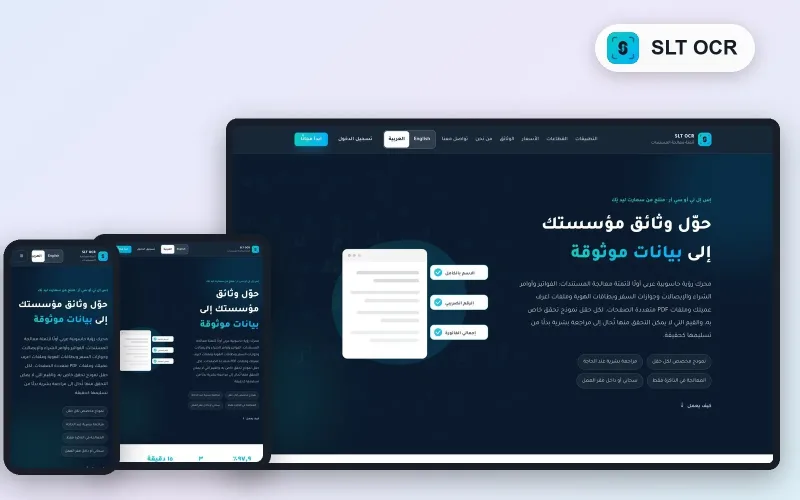
- Rapid Access to Expertise: Immediate access to qualified and experienced teams in specific technologies (e.g., AI, web development, mobile applications). For example, companies can leverage Smart Lead Tech's expertise in building platforms like Kaleem for AI-powered speech therapy, or solutions like SLT OCR for Arabic document data extraction.
- Cost Savings: Reduced costs associated with fixed salaries, benefits, training, and equipment.
- Focus on Core Business: The company can focus on its core strategy and leave technical details to specialists.
- Flexibility and Scalability: Easy to scale up or down the technical team size based on project needs.
- Continuous Innovation: Benefits from the latest technologies and best practices applied by the specialized company across its diverse projects.
Challenges:
- Understanding Business Requirements: The partner might take time to understand the company's internal culture and unique requirements.
- Reliance on a Third Party: Partnership requires high trust and effective relationship management to ensure quality and timely delivery.
- Security and Privacy: The need for strong guarantees to protect data and intellectual property, especially in sensitive sectors like FinTech, which requires a balance between innovation and stability.
- Cultural and Language Differences: Communication challenges may arise if the partner is not familiar with the local context.
"In a world where market demands fluctuate and the pace of technological innovation accelerates, the decision to invest in technical capabilities is not merely an operational choice, but a strategic bet on the future of competitiveness."
Decision Matrix: In-House Build vs. External Partnership?
CriterionIn-House TeamSpecialized Partner (Smart Lead Tech)Control & OwnershipVery HighMedium to High (depending on contract)Upfront CostsHighLowOperating CostsHigh & OngoingFlexible & Project-SpecificSpeed to ExpertiseSlow (recruitment & training)Very FastScope of ExpertiseLimited (by team's skills)Broad & SpecializedStrategic FocusConsumes internal resourcesAllows focus on core businessFlexibility & ScalabilityModerateVery HighSecurity & PrivacyEasily controlledRequires strong contracts & guaranteesLocal Context UnderstandingVery HighHigh (for companies like Smart Lead Tech)Practical Recommendation
There is no one-size-fits-all solution. The decision depends on the nature of your project, company size, budget, and strategic objectives. If you are a startup or an SME in the GCC or Egypt looking to launch innovative products quickly or require specialized expertise in areas like AI or FinTech without the burden of hiring a full team, then partnering with a specialized Arab software company like Smart Lead Tech represents a strong strategic option. Smart Lead Tech can provide qualified teams to build e-commerce platforms like Flore, POS systems like TtaKkaa, or project management solutions like Tatweer, with a focus on quality, speed, and understanding the local context.
However, if your company is large and has the capacity and resources to invest in building an in-house team long-term, and wishes to maintain full control over intellectual property and the development of highly complex core products, then building an in-house team remains a viable option, leveraging the flexibility of remote work to attract top talent, as indicated by Saudi market news.
In both cases, investing in technical talent development, whether internally or through partnerships, remains the primary driver for growth and innovation in the region.