Skip to content
Smart Lead Tech
Home
Services
Our work
Saudi Arabia
About us
Blog
Contact us
🇸🇦العربيةContact now
Smart Lead Tech

Smart software solutions

Follow us

Company

  • About us
  • Our work
  • Our services
  • Saudi Arabia
  • Restaurant POS
  • Contact us
  • Book a call

Quick links

  • Blogs
  • Pricing
  • Refund policy
  • Privacy policy
  • Terms and conditions
  • Data deletion

Contact us

  • Egypt — Head Office

    Office 6, Bldg 23, Makkah Al-Mukarramah St., Omraneya, Giza 3540203, Egypt
  • Saudi Arabia — Branch

    Bldg 2646, Secondary 123, Street 7697, Ishbiliyah Dist., Jubail 35416, Kingdom of Saudi Arabia
  • Email address

    help@smartleadtech.com
  • Phone number 🇪🇬

    +20 102 201 4671
  • Phone number 🇸🇦

    +966 53 044 7112

© 2026 Smart Lead Tech. All rights reserved.

  • Smart Lead Tech Information Technology LLC·Commercial Register ⁦61239⁩·Tax ID ⁦774-391-316⁩

  • Smart Lead Tech Software Establishment·CR ⁦7054902585⁩·VAT

What is RAG and why it matters for every LLM-powered product

You have heard Retrieval-Augmented Generation (RAG) in every recent tech conference. Here is the pragmatic version: when do you actually need it, and how do you build it safely on top of your own data?Why not just use an…
02/10/2025 — 9 min read

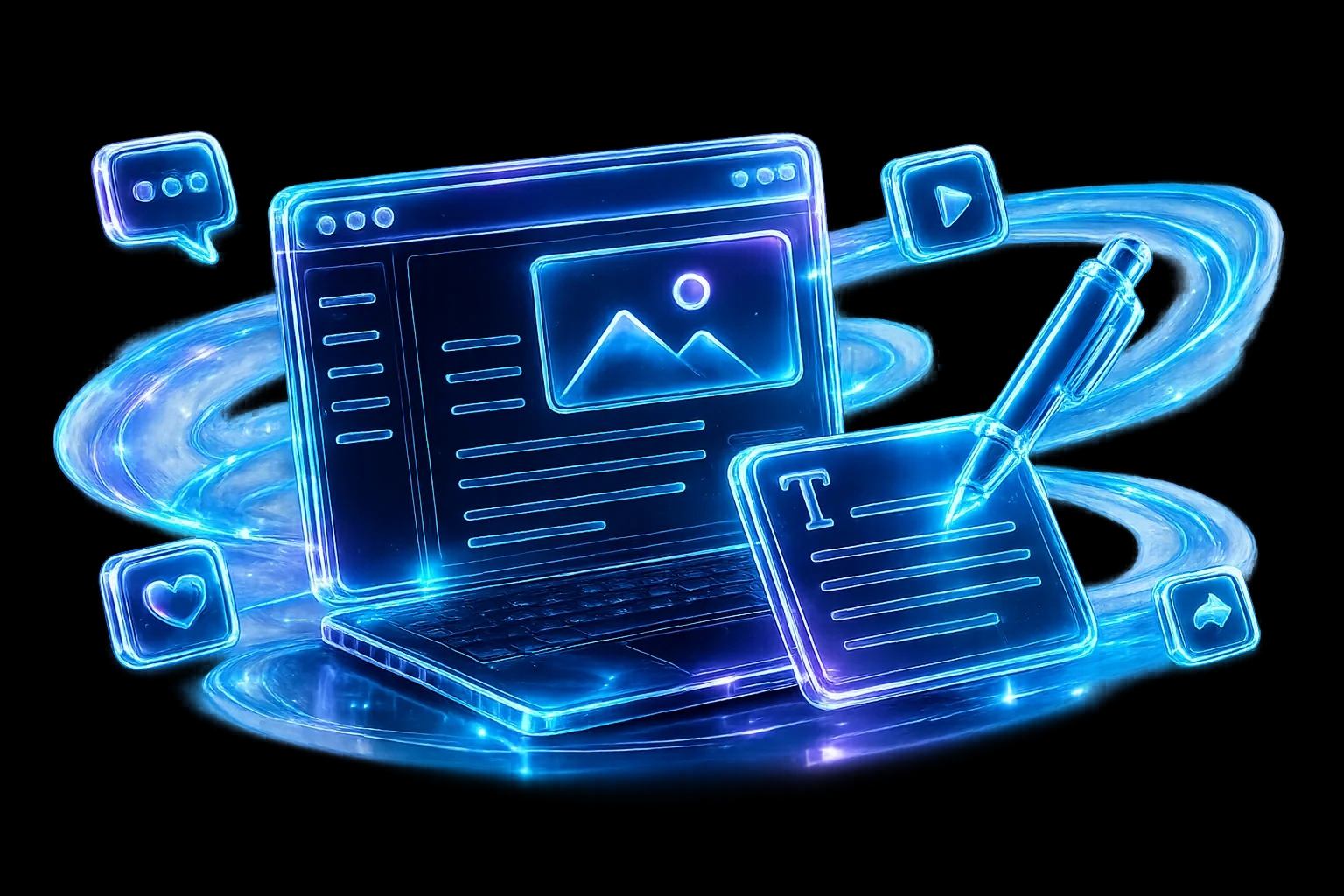
Architectural diagram of the RAG pattern

You have heard Retrieval-Augmented Generation (RAG) in every recent tech conference. Here is the pragmatic version: when do you actually need it, and how do you build it safely on top of your own data?

Why not just use an LLM?

Large Language Models are brilliant generators but they have three fundamental issues:

  • Hallucinations: they produce confident but fabricated answers.
  • Knowledge cutoff: they know nothing after their training date.
  • Private data: they cannot see your internal knowledge.

RAG in one sentence

"Before answering, search your own data, extract context, and hand it to the model". The pipeline has four stages:

  1. Ingest: split your docs into small chunks (500–1000 tokens).
  2. Index: compute semantic embeddings and store them in a vector store.
  3. Retrieve: at query time, embed the question and pull the closest chunks.
  4. Generate: feed chunks + question to the LLM — it answers with real citations.

When do you need it?

Rule of thumb: if the answer depends on internal knowledge, changes over time, or must cite a source — you need RAG.

Common patterns: support chat over a company KB, an internal HR assistant that reads the policy handbook, or a legal assistant grounded in real contracts.

Security best practices

  • Isolate each tenant in its own vector collection.
  • Enforce RBAC before retrieval, not after.
  • Log every query + answer for audit.
  • Run a weekly regression question-set to spot quality drift.

Our default stack at Smart Lead Tech

We usually build RAG on pgvector inside PostgreSQL (one less DB to run), a NestJS 10 retrieval layer, and a Next.js 14 UI with streaming responses. Results are stable and easy to observe.
Share

Projects related to this article

  • AI SystemsPythonNext.jsDocker

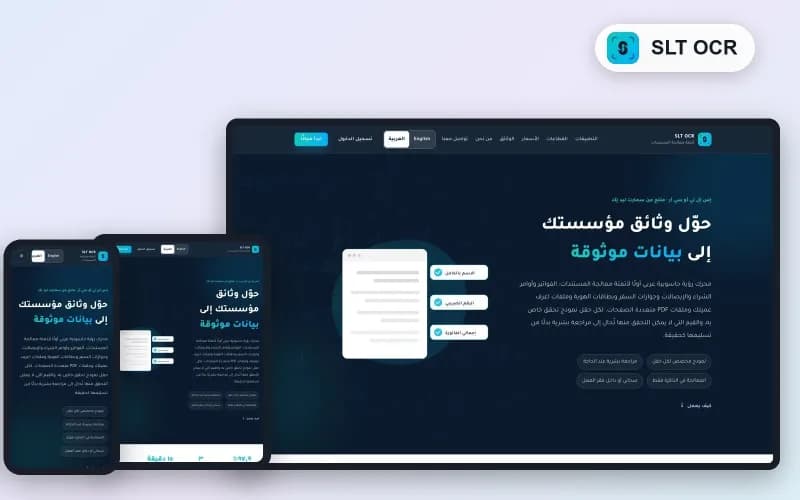
    SLT OCR — Arabic-first Document Data Extraction

    An Arabic-first computer-vision engine that turns invoices, purchase orders, receipts, ID cards and KYC packs into data you can trust — a verification model per field, human review when needed, processed in memory only.

    Show more
    SLT OCR — product landing on desktop and phone
  • AI SystemsFlutter

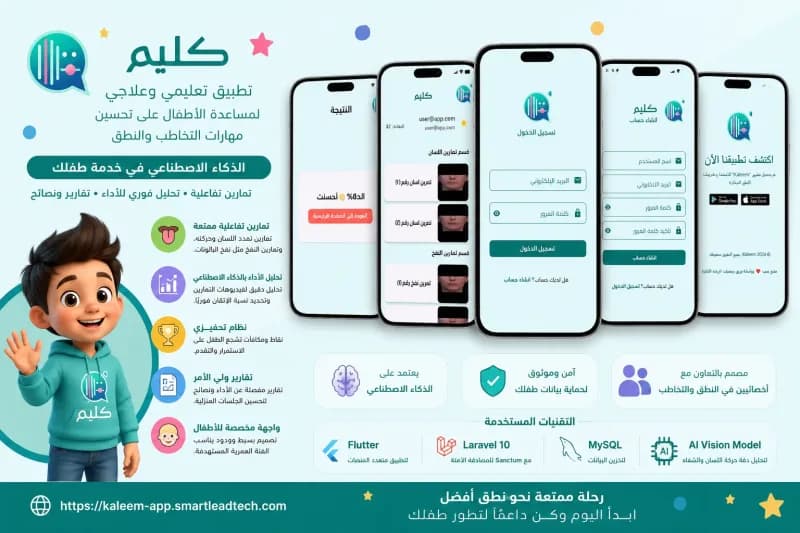
    Kaleem — AI-Powered Speech Therapy for Kids

    A playful, AI-powered speech-therapy app for children, with interactive exercises and a friendly mascot to keep them engaged.

    Show more
    Kaleem — AI speech therapy for children
  • AI SystemsPython

    Darb — AI Traffic-Incident Management System

    A smart system that manages and processes traffic incidents using ML, computer vision, and tight insurance integrations.

    Show more
    Darb — AI-driven traffic-incident management

Related Blogs

  • An industrial robot extending its hand towards a screen displaying AI data with a map of the GCC and Egypt in the background, symbolizing innovation and opportunities in the region.

    AI in GCC and Egypt: Sector Opportunities and Governance Risks in 2026

    The technological landscape in the GCC and Egypt is undergoing rapid transformation, driven by massive investments in artificial intelligence (AI) and its adoption across vital sectors such as industry, tourism, and cons…

    09/29/2026 — 8 min read

  • A terminal running Claude Code next to a GitHub code review

    A full day with Claude Code: how the engineer’s day changed at its roots

    This is not an article about “the future of programming”. It is the diary of a real team, in a real company, during an ordinary working week. Since Claude Code became a core tool for us, the question is no longer “does A…

    09/01/2026 — 8 min read

  • Diagram of an agent that plans, retrieves and verifies before answering

    From RAG to agentic RAG: when the assistant stops “search then answer” and starts reasoning

    A year ago we described RAG as “search your data, then answer”. That was true and enough for a support bot. But it fails on a question like: “What is the right learning path for a new sales hire who failed the product te…

    06/02/2026 — 9 min read