Egypt's New Logistics Corridors: Build In-House Capabilities or Partner for E-commerce Expansion?
The regional logistics landscape has witnessed a significant transformation with Egypt's announcement of implementing 8 integrated international logistical corridors. This development, aimed at solidifying Egypt's positi…

The regional logistics landscape has witnessed a significant transformation with Egypt's announcement of implementing 8 integrated international logistical corridors. This development, aimed at solidifying Egypt's position as a regional hub, raises critical strategic questions for business owners and tech managers in the GCC and Egypt, particularly in the e-commerce and logistics sectors.
This Week's Key Development
Egypt Implements 8 Integrated International Logistical Corridors
According to Akhbar El Nas El Youm on October 3, 2026, Egypt is currently implementing eight integrated international logistical corridors. These corridors connect the Red and Mediterranean Sea ports, representing a strategic move to enhance Egypt's capacity to serve regional and international trade flows.
The Strategic Opportunity: What These Corridors Mean for Your Business
These new logistical corridors in Egypt constitute vital infrastructure that can significantly reduce shipping costs and increase delivery speed across the region. For e-commerce companies, this means easier and faster access to a broader customer base, both within Egypt itself and in GCC countries that import and export through these corridors. Improved logistical efficiency can directly translate into:
- Market Expansion: Reaching new customers in previously uneconomical regions.
- Enhanced Customer Experience: Faster, more reliable delivery, boosting brand loyalty.
- Reduced Operational Costs: Lower shipping and warehousing expenses due to improved infrastructure efficiency.
- Supply Chain Resilience: Greater ability to adapt to demand fluctuations and market challenges.
This development presents business owners and tech managers with a pivotal decision: should they invest in building in-house logistics capabilities to fully leverage this infrastructure, or should they opt for partnerships with third-party logistics (3PLs) providers?
“Robust logistics infrastructure is not just an advantage; it's an economic growth engine and an enabler for digital commerce. The decision on how to utilize it will shape companies' trajectories for years to come.”
Option 1: Building In-House Logistics Capabilities
This approach involves investing in physical assets such as warehouses, transport fleets, and proprietary inventory and shipping management systems. It also requires developing or customizing advanced supply chain management (SCM) and enterprise resource planning (ERP) software solutions that integrate with logistical operations.
Advantages:
- Full Control: Complete oversight of service quality, delivery times, and customer experience.
- Customization: Ability to design processes and software solutions to meet precise business needs.
- Innovation: Greater capacity to implement new technologies like AI in logistics (for dynamic pricing or route optimization) more quickly.
- Long-Term Efficiency: Initial costs may be high, but could decrease in the long run with increased operational volume.
Challenges:
- High Upfront Capital Costs: Significant investment in infrastructure and assets.
- Operational Complexity: Requires specialized expertise in logistics and inventory management.
- Risks: Bearing the risks of market fluctuations and maintenance/operational costs.
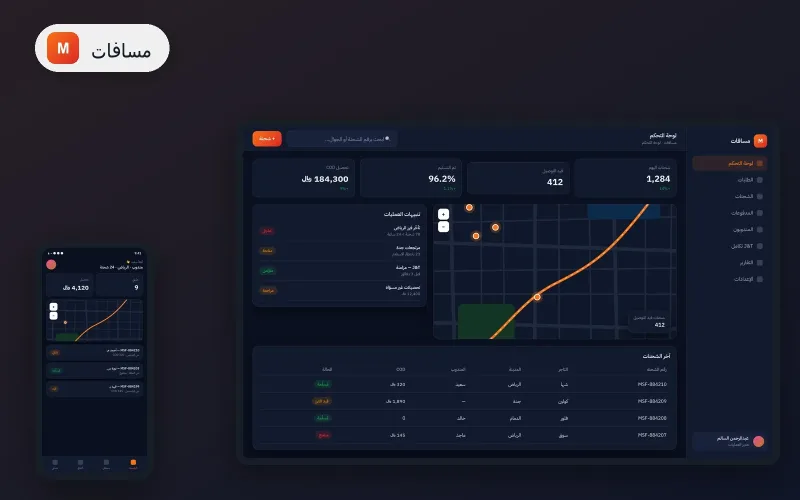
- Technical Investment: Need for specialized development teams to build or customize systems like Massafat for comprehensive shipping management or AutoParts System for complex inventory.
Option 2: Relying on 3PL Partnerships
This means outsourcing logistics services providers to manage warehousing, shipping, delivery, and even inventory management. These partnerships can facilitate expansion into new markets like Egypt, leveraging new infrastructure without the need for significant capital investments.
Advantages:
- Lower Upfront Costs: Avoidance of large capital expenditures.
- Flexibility and Scalability: Easy to scale up or down based on seasonal demand or market growth.
- Specialized Expertise: Leveraging the expertise of 3PLs in managing complex supply chains.
- Focus on Core Competencies: Freeing up resources to focus on product development and marketing.
- Faster Time-to-Market: Rapid entry into new markets like Egypt by relying on partner networks.
Challenges:
- Loss of Some Control: Less direct control over service quality and delivery times.
- Dependency: Risks associated with reliance on partner performance.
- Technical Integration: Need for seamless integration between your e-commerce systems (such as SLT E-Commerce or Souq App) and 3PL systems, potentially requiring custom APIs.
- Data Access: Logistics data might be less transparent or harder to access in real-time.
Decision Table: In-House Build vs. External Partnership
Feature/ChallengeBuilding In-House CapabilitiesRelying on 3PLsInitial CostHighLowOperational ControlFullModerateFlexibility & ScalabilityLess flexible, requires new investmentHigh, easy to scale up/downExpertise RequiredSpecialized in-houseProvided by partnerTechnical InnovationGreater capacity for custom developmentDepends on partner's capabilitiesTime-to-MarketSlower (infrastructure build-out)Faster (leveraging partner network)Service QualityDirect controlDepends on partner's performanceTechnical InvestmentDevelop custom SCM/ERP systemsIntegrate with partner's systemsPractical Recommendation for Tech Managers and Business Owners
With Egypt's implementation of integrated international logistical corridors, the decision has become more strategic than ever. There is no one-size-fits-all solution, but a hybrid approach can be effective:
- Start with Partnership: Especially when entering new markets like Egypt, partnering with 3PLs can offer speed-to-market and reduce initial risks. Ensure the partner has robust technical systems that can integrate with your platforms.
- Invest in Technology: Whether you choose to build in-house or partner, investing in powerful software is crucial. Platforms like Massafat from Smart Lead Tech can provide you with comprehensive visibility into shipping operations, even if you work with multiple 3PLs. Modern e-commerce systems (like SLT E-Commerce) should also be designed for seamless integration with various logistics solutions.
- Monitor Performance: Use data and analytics to evaluate the performance of logistical partners and determine if it's time to bring some operations in-house or seek new partners.
- Consider Gradual Expansion: If you have ambitious growth plans, consider building in-house capabilities for your core, high-volume operations, while continuing to use 3PLs for remote areas or specialized needs.
Leveraging these logistical developments requires a clear strategic vision, supported by the right technological solutions. Whether the decision is an internal build or an external partnership, Smart Lead Tech stands as a technical partner to help you build the systems that enable you to make the most of these opportunities.