New AI Models & Regional Infrastructure: Building In-House Capabilities vs. Integrating Off-the-Shelf Solutions?
The tech landscape in the GCC and Egypt is witnessing an unprecedented acceleration in the adoption and development of Artificial Intelligence, driven by global innovations and significant regional investments. This mome…

The tech landscape in the GCC and Egypt is witnessing an unprecedented acceleration in the adoption and development of Artificial Intelligence, driven by global innovations and significant regional investments. This momentum places business owners and tech managers at a strategic crossroads: is it time to build AI capabilities in-house from scratch, or has leveraging ready-made models and available infrastructure become the faster and more efficient option?
News of the Week
- Anthropic Launches "Claude 4" with Advanced Contextual Understanding: Anthropic announced its new model, "Claude 4" (according to TechCrunch), featuring significantly enhanced long-context understanding and complex task processing, opening new avenues for customer service applications and data analysis.
- Google Releases Major Updates for Gemini AI Developer Tools: Google unveiled improvements to its APIs and code libraries for Gemini AI models (according to Google Developers Blog), making it easier to integrate Gemini's advanced capabilities into various applications.
- Saudi Arabia Invests Billions in New Data Centers to Support AI: The Kingdom of Saudi Arabia announced massive investment plans to expand advanced data centers (according to Bloomberg Middle East), aiming to provide robust and reliable infrastructure for local AI applications.
- Microsoft Announces Dedicated AI Agents for Business: Microsoft revealed a new suite of specialized AI agents (according to ZDNet) designed to help businesses automate repetitive tasks and optimize workflows.
- Egypt Launches National Initiative to Develop AI Skills: The Egyptian government announced a national initiative to train and qualify thousands of youth and professionals in AI and data science (according to the Egyptian Ministry of Communications and Information Technology), aiming to bridge the skills gap and foster innovation.
Option 1: In-House AI Development
Given recent developments, building an in-house AI team or developing custom models appears to be an attractive option for companies seeking full intellectual property ownership and absolute control. With initiatives like Egypt's skill development program, the availability of qualified local talent is increasing. Furthermore, Saudi investments in data centers provide an ideal hosting environment for complex solutions requiring substantial computational resources.
When is In-House Development the Optimal Choice?
- High Customization Requirements: If your business needs are unique and demand AI models trained on very specific datasets, or require deep integration with non-standard core systems.
- Full Control and Intellectual Property: For companies that consider AI a core competitive advantage and wish to retain full ownership of the intellectual property.
- Strict Regulatory Compliance: In sectors requiring high levels of security, privacy, and adherence to local regulations, full control over infrastructure and software can be crucial.
- Sufficient Resources: This option demands significant investment in time, money, and specialized talent.
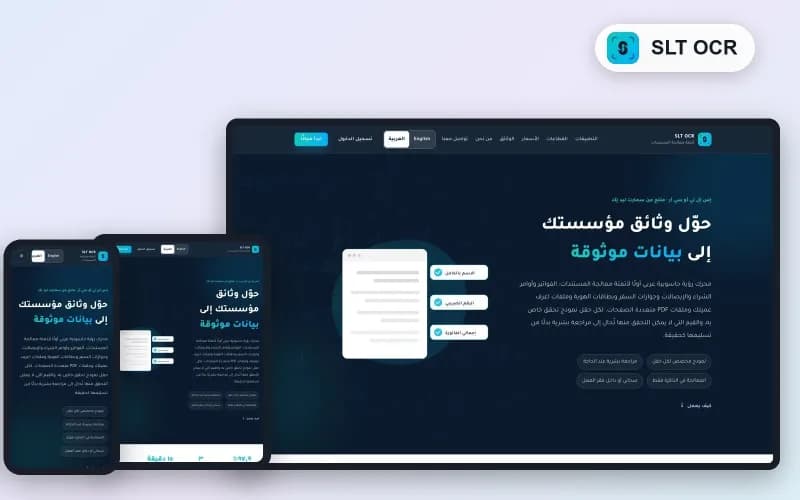
Example: A company needing a computer vision system (like SLT OCR) specifically trained on certain types of old Arabic documents or handwriting, or an AI system (like Diabetes Vision Detector) requiring precise training on sensitive medical data to ensure accuracy and compliance.
"Saudi investments in data centers and Egypt's skill-building initiatives demonstrate that the region is poised to support AI innovation, whether through in-house development or leveraging advanced services."
Option 2: Integrating Off-the-Shelf Solutions and Agents
On the other hand, new models like Claude 4 and Google's Gemini AI tool updates, along with Microsoft's dedicated AI agents for business, offer the ability to integrate advanced AI capabilities quickly and at a lower cost. This option is ideal for companies that want to achieve rapid value without significant investment in research and development.
When is Integration the Optimal Choice?
- Speed to Market: To deliver AI features quickly and capitalize on advanced models without having to build everything from scratch.
- Focus on Operational Efficiency: To automate repetitive tasks and improve workflows using ready-made AI agents, reducing costs and increasing productivity.
- Access to Cutting-Edge Technology: To leverage the latest innovations in Large Language Models (LLMs) and computer vision provided by global giants like Anthropic, Google, and Microsoft.
- Limited Developer Budget: This option reduces the need for a large team of AI engineers and data scientists.
Example: A company looking to enhance customer service with smart chatbots (like SLT WhatsApp Suite) or analyze customer sentiment by integrating Claude 4, or automate administrative tasks using Microsoft's intelligent agents, without the need to train its own language model.
Decision Table: In-House vs. External Integration?
CriterionIn-House DevelopmentIntegrating Off-the-Shelf SolutionsInitial CostHigh (development teams, infrastructure, training)Medium to low (subscriptions, API fees)Speed to MarketSlow (research, development, testing)Fast (integration, minimal customization)Control & CustomizationFull (intellectual property, deep modification)Limited (depends on API and service flexibility)Third-Party DependencyLowHigh (reliance on service provider)Talent RequirementSpecialized AI team (data scientists, ML engineers)Integration and application development engineersMaintenance & UpdatesFull internal responsibilityPartial responsibility (service provider updates)Compliance & SecurityFull control over data and infrastructureDepends on service provider policiesPractical Recommendation
For business owners and tech managers in the GCC and Egypt, the decision between building in-house capabilities and integrating off-the-shelf solutions largely depends on strategic priorities and available resources. If AI is the core of your business and your primary competitive advantage, and you have sufficient resources, investing in in-house development may be worthwhile in the long run, leveraging Saudi infrastructure and Egyptian talent.
However, if the goal is to enhance operational efficiency, deliver rapid AI features to your customers, or test new ideas at a lower cost, integrating ready-made models and agents from giants like Anthropic, Google, and Microsoft represents a more pragmatic and effective path. Companies like Smart Lead Tech can assist clients in the GCC and Egypt in integrating these advanced solutions into their existing platforms, or building new applications that leverage these capabilities, such as developing smart automation solutions using AI agents, enhancing data analytics in platforms like TtaKkaa Admin Panel or Salaries System, or even building intelligent real estate matching engines like Real Estates Matcher, to ensure maximum value from these accelerating technologies.