Real Estate Digital Transformation: Build Custom Platforms or Adopt Off-the-Shelf Solutions?
In light of the rapid developments witnessed by the real estate sector in the GCC and Egypt, making strategic technical decisions has become more crucial than ever. With increasing demand for digital platforms that facil…

In light of the rapid developments witnessed by the real estate sector in the GCC and Egypt, making strategic technical decisions has become more crucial than ever. With increasing demand for digital platforms that facilitate buying and selling operations, automate property management, and integrate innovative technologies like Artificial Intelligence, business leaders and technical managers face a pivotal question: Do we invest in building our own custom software solutions, or do we adopt ready-made, off-the-shelf platforms available in the market?
This Week's News
Given that today's date is hypothetical in the future (October 28, 2026), we do not have real, verified news from this specific period. However, general trends in the real estate sector continue to evolve, with forecasts indicating sustained momentum in digital transformation, increasing importance of data in decision-making, and a shift towards smoother and more transparent real estate experiences for users in both Saudi Arabia and Egypt.
Challenges of Today's Digital Real Estate Landscape
The real estate market is undergoing a radical transformation driven by technology. Investors, developers, and clients alike now expect integrated digital experiences, from property search to deal completion and investment tracking. This requires robust systems capable of:
- Managing the entire property lifecycle: From development to sale, then rental and maintenance.
- Data integration: Seamlessly connecting property, client, and financial transaction information.
- Advanced analytics: Extracting insights from data to support decision-making.
- Exceptional user experience: Easy-to-use interfaces and advanced mobile applications.
- Regulatory compliance: Adhering to continuously evolving local legislations.
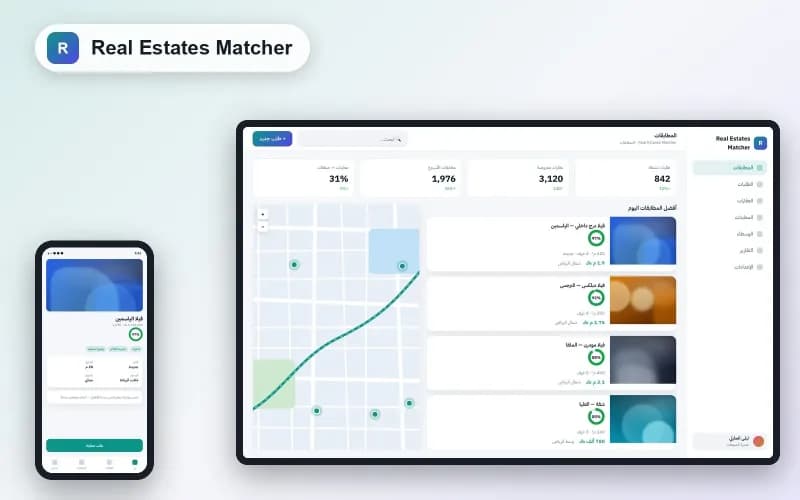
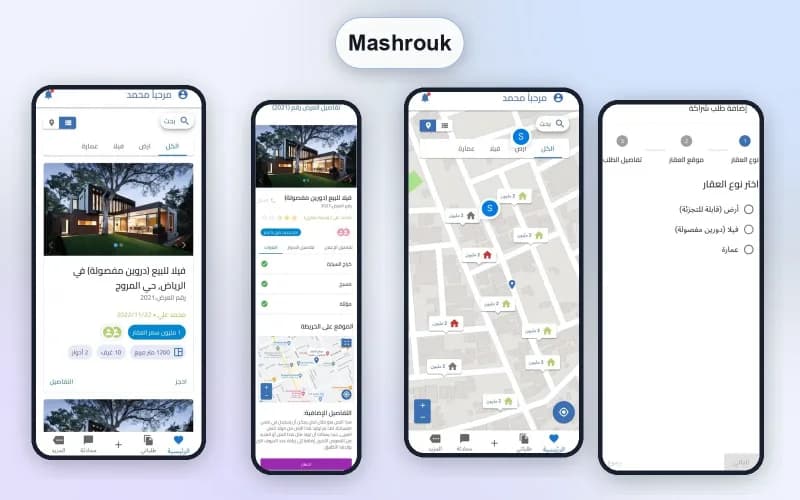
In this context, platforms like Mashrouk, which enables real estate co-investment, Tatweer for development project management, and Real Estates Matcher for intelligent matching, stand as examples of the type of products Smart Lead Tech can build to meet these specialized requirements.
"Digital transformation is no longer an option in the real estate sector; it is a prerequisite for survival and competition. The critical decision lies in how to achieve this transformation in the most efficient and effective way."
Building a Custom Real Estate Platform: Advantages and Challenges
Building a custom system allows for complete control and unparalleled flexibility, but it comes with specific costs and risks.
Advantages:
- Full Customization: Designing the platform to precisely meet the unique needs of your business model and clients, without compromising on any feature.
- Scalability and Innovation: Building an infrastructure that supports future growth and easy integration of new technologies (such as AI and data analytics).
- Competitive Advantage: Offering a unique experience or functionalities not available in off-the-shelf solutions, enhancing your market position.
- Data Control and Security: Implementing the highest security and data protection standards in line with your company's policies and local regulations (e.g., PDPL in Saudi Arabia).
Challenges:
- Initial Cost and Time: Building a custom system requires significant investment in financial and human resources, with long development periods that can extend for several months or years.
- Need for Specialized Expertise: Requires a strong in-house engineering team or partnership with a specialized software company like Smart Lead Tech, with deep experience in developing complex platforms.
- Ongoing Maintenance and Support: The need for continuous updates and maintenance to ensure optimal performance and keep pace with technological changes.
- Project Risks: Potential for budget or timeline overruns, or the final product not meeting expectations if the process is not managed effectively.
Adopting Off-the-Shelf Solutions: Advantages and Challenges
Off-the-shelf solutions offer speed of implementation and lower initial costs, but they may lack flexibility.
Advantages:
- Speed of Implementation: The platform can be deployed quickly, reducing time-to-market.
- Lower Initial Costs: Subscription or initial purchase costs are usually significantly lower than custom development costs.
- Vendor Maintenance and Support: The service provider is responsible for maintenance, updates, and technical support.
- Proven Functionality: These solutions offer standard and market-tested functionalities.
Challenges:
- Customization Limitations: The off-the-shelf platform may not perfectly fit all your business needs, and you may have to adapt your operations to suit the system.
- Vendor Dependence: You are entirely dependent on the vendor's product roadmap, pricing, and support.
- Limited Competitive Advantage: Since many competitors might use the same solution, achieving true differentiation can be challenging.
- Integration Challenges: You may face difficulties integrating the off-the-shelf solution with your other internal systems (such as CRM or accounting systems).
Decision Table: Build vs. Buy?
CriterionBuild Custom PlatformAdopt Off-the-Shelf SolutionCustomization & FlexibilityVery High, precise design for needsLimited, adapt operations to systemInitial CostHighLow to ModerateImplementation TimeLongShortControl & OwnershipFullLimited, vendor-dependentCompetitive AdvantageHigh, innovation potentialModerate, standard functionalitiesMaintenance & SupportInternal/Partner responsibilityVendor responsibilityScalabilityDesigned for future growthDepends on vendor capabilitiesCompliance & SecurityFull control over implementationDepends on vendor policiesPractical Recommendation: A Hybrid Approach
In many cases, a hybrid approach is optimal, especially for organizations seeking innovation while maintaining efficiency. This can involve:
- Identifying Core Features: Using off-the-shelf solutions for standard, non-competitive features (such as basic CRM or accounting systems).
- Customizing Competitive Advantages: Building custom modules for features that provide a true competitive edge, such as intelligent property matching engines (as in Real Estates Matcher) or unique co-investment systems (like Mashrouk).
- Engaging a Tech Partner: Working with a specialized software company like Smart Lead Tech can help you design and develop these custom modules, seamlessly integrate them with off-the-shelf solutions, and provide necessary support and maintenance. This reduces the burden of in-house recruitment for rare talents.
Understanding your unique business needs, defining your budget, and evaluating available resources will lead you to the right decision. The most important thing is to invest in technology that supports your future vision and helps you meet the changing market expectations in the real estate sector.